Guide
XCMG XE215GA ECO 21.5-Tonne Excavator: Specs, Configurations and Quote Price
The ECO build of the XE215GA: four-cylinder twin-turbo Cummins, SCR-free aftertreatment, Kawasaki hydraulics, working range and pre-order checks.
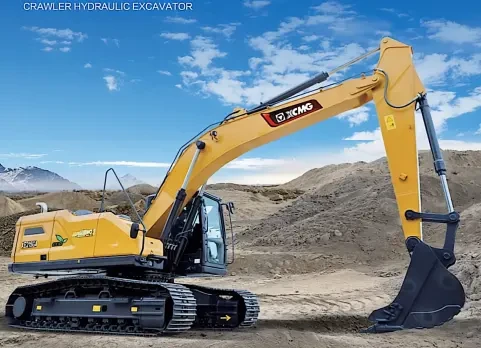
The XCMG XE215GA ECO is a 21.5-tonne class crawler excavator built for a straightforward commercial problem: cutting owning costs without giving up the output of a conventional 215 model. XCMG’s answer is a four-cylinder Cummins F4.5TT twin-turbo engine, a Kawasaki hydraulic package, and an aftertreatment system that does not use AdBlue. For contractors comparing a new machine in the 20-tonne class for earthmoving, road construction or municipal work, those choices shape both the daily cycle time and the monthly fuel and maintenance bill.
The figures below combine XCMG’s published data for the ECO variant with platform data for the 21.5-tonne XE215GA. Working range and digging forces change with boom, arm and bucket configuration, so the serial-number-specific data sheet should be checked before an order is confirmed.
Core specifications
| Item | Specification |
|---|---|
| Model | XCMG XE215GA ECO |
| Operating weight | 22,500 kg |
| Standard bucket | 1.05 m³ (0.9–1.2 m³ options) |
| Engine | Cummins F4.5TT, four-cylinder, twin-turbocharged |
| Rated power | 129 kW at 2,000 rpm (173 hp) |
| Maximum torque | 745 N·m |
| Aftertreatment | EGR + DOC + DPF, no DEF/AdBlue |
| Hydraulic system | Kawasaki pump and valve, positive flow control |
| Travel speed | 6.0 / 3.3 km/h |
| Gradeability | 70% (35°) |
| Fuel tank | 400 L |
| Hydraulic tank | 150 L |
| Transport dimensions | 10.06 × 2.99 × 3.1 m |
| Track shoe width | 600 mm |
| Maximum digging depth | 6,680 mm |
| Maximum digging reach | 9,940 mm |
| Maximum digging height | 9,620 mm |
| Maximum dump height | 6,780 mm |
| Bucket digging force | 165 kN |
| Arm digging force | 120 kN |
A four-cylinder engine with two turbochargers
The F4.5TT displaces 4.5 litres and uses two turbochargers to deliver 129 kW at 2,000 rpm and 745 N·m of torque. XCMG’s standard XE215GA listing pairs the same 129 kW with a six-cylinder 6.7-litre engine. The ECO reaches that rating with two fewer cylinders and lower displacement, and its 745 N·m torque figure is below the six-cylinder unit. That gap is the clearest technical difference between the two versions.
XCMG does not present the ECO as a higher-output machine. The company’s stated target is a lower fuel burn across the working range. Its power-fuel curve is tuned to keep the engine in an efficient zone, and the PIC feed-forward control adjusts engine response ahead of hydraulic demand. XCMG quotes a reduction of about 7% in fuel consumption per bucket, together with multi-level automatic idle that cuts fuel use during waiting periods. These are manufacturer figures. Real consumption depends on material density, cycle length, operator technique and the attachment fitted.
No urea, but the DPF still needs attention
The ECO uses EGR, a diesel oxidation catalyst and a diesel particulate filter to meet its emission target. There is no SCR stage and no DEF tank, so the operator does not buy, store or refill AdBlue. On sites where DEF supply is unreliable, that removes a recurring logistics task and a common cause of derating.
The trade-off is that the DPF still collects soot and ash. Soot burns off during regeneration; ash does not, and it has to be removed at service intervals. The absence of SCR therefore moves maintenance from the DEF system to the filter service schedule. Buyers should confirm the regeneration strategy and ash-cleaning interval for the exact build in the operator manual, particularly for machines that run short cycles or idle for long periods.
Hydraulics and control
The hydraulic package uses Kawasaki pumps and valves with positive flow control. The system matches flow to demand rather than running at a fixed displacement, which is the basis for smooth compound movement and precise grading. PIC feed-forward control reads the joystick input and prepares the engine and pump before the load arrives, reducing the lag that makes fine levelling difficult.
A factory auxiliary hydraulic circuit is available for breaker or shear work. The flow and pressure settings are configuration items, not universal values, so the auxiliary line should be specified with the machine order. A field-installed circuit can affect warranty terms and resale documentation.
Working range and site fit
With the standard 5,680 mm boom and 2,910 mm arm, the platform reaches 6,680 mm of digging depth and 9,940 mm of digging reach. Maximum digging height is 9,620 mm and dump height is 6,780 mm, which suits trenching, basement work and truck loading with standard high-sided bodies. The minimum swing radius is 3,530 mm and the tail swing radius is 3,035 mm, so the machine needs a clear working envelope behind it.
At 22,500 kg and 2.99 m wide, the XE215GA ECO travels on a low-bed trailer and is not a compact-site machine. Ground pressure with 600 mm shoes is in the 48.6 kPa range on the platform, which is acceptable for firm ground but should be reviewed for soft or wet conditions. Wider shoes reduce ground pressure and increase transport width; narrower shoes improve traction on hard surfaces but concentrate load.
Where the machine fits
The 21.5-tonne class is the volume segment for general earthmoving, road building, municipal utilities and site preparation. The ECO variant adds most value where annual hours are high and fuel is a large share of the operating cost, such as rental fleets, road contractors and long-running housing or industrial projects. For quarry work, the limiting factors are usually undercarriage wear and breaker compatibility rather than engine output, so those items deserve separate review.
What to confirm before you buy
- Confirm the engine code and aftertreatment layout on the machine plate. The ECO is specified with the four-cylinder F4.5TT, while some XE215GA builds have used a six-cylinder 6.7-litre engine. The model name alone does not tell the two apart.
- Match the emission package to the destination country. Ask for the emission certificate and the exact hardware configuration, not only a brochure statement.
- Confirm the work equipment. Boom length, arm length and bucket type change digging force, reach and transport height.
- Specify the auxiliary hydraulic line if a breaker or shear will be used. Flow and pressure settings must match the attachment.
- Check the undercarriage specification. Shoe width affects ground pressure and transport width, and track condition is the main wear item on a used unit.
- Review documents and inspection records. Year, hours, warranty terms and a test report should be available before a deposit is paid.
Request a quote
SHUNFA Machinery has 35 years of experience in used construction machinery export and new unit sourcing. We handle machine selection, inspection, shipping and customs documents as a one-stop solution. Used units pass a six-stage inspection before shipment, and SGS, CE or EPA documentation can be arranged where the destination requires it.
For XE215GA ECO availability, configuration and a delivered price, send the destination port, quantity, emission requirement and preferred work equipment. We reply with a quote within 24 hours.
Phone and WhatsApp: +86 13764468035. Email: shunfa@usedexcavator.shop. Location: Anhui, China.
Request a quote for this machine
Send the destination port, bucket or breaker configuration and preferred year range. We reply within 24 hours with matching units, photos and a delivered price.